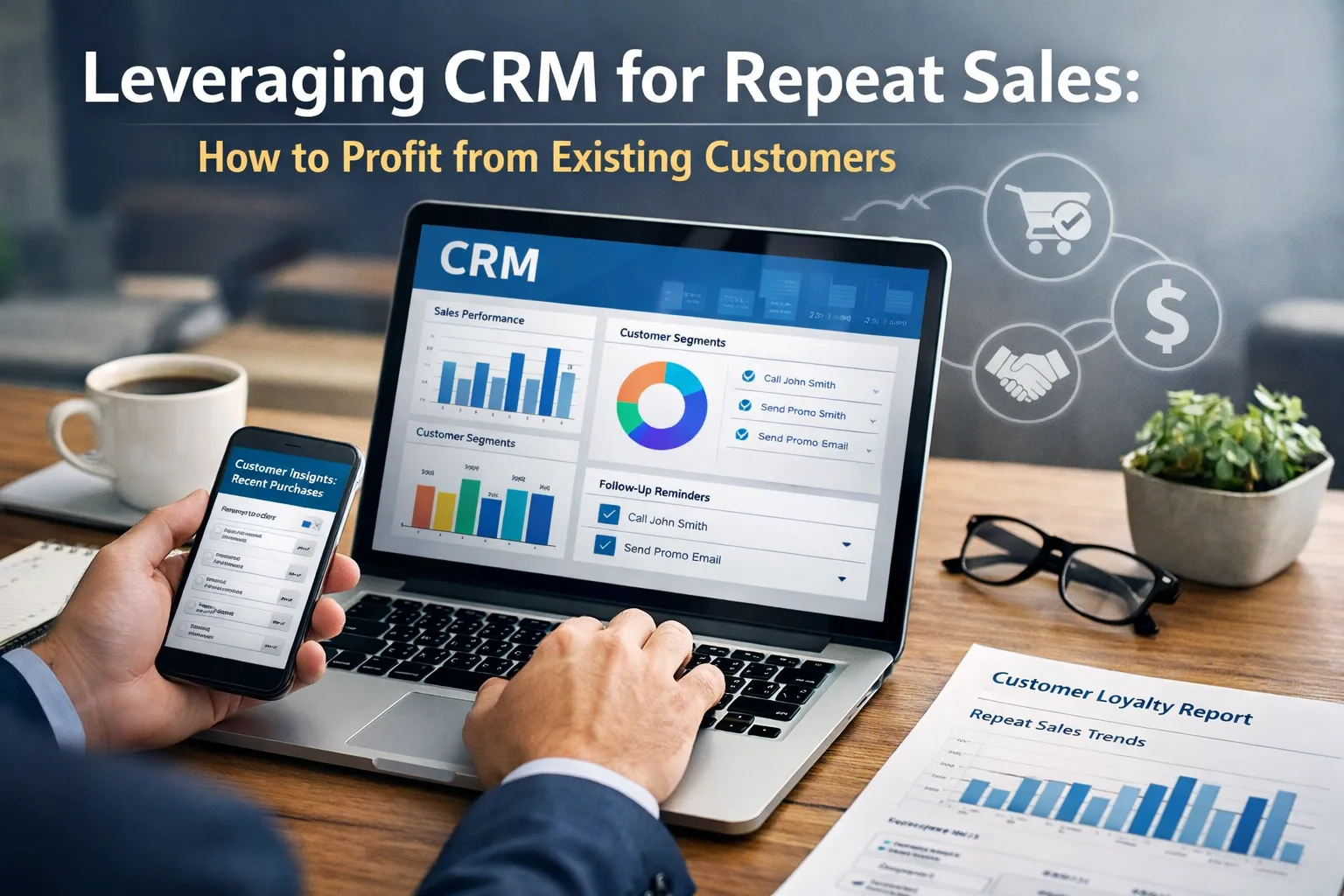
In today's competitive business landscape, maintaining relationships with existing customers is just as crucial as attracting new ones. Utilizing CRM (Customer Relationship Management) for repeat sales is a strategy that can significantly boost your profits from customers who have already made purchases. But how can you effectively implement this approach? Let’s delve into the details.
How to Protect Your Email from Phishing: Practical Tips What are repeat sales through CRM in simple terms?Repeat sales through CRM refer to the process of leveraging data from existing customers to facilitate additional sales.
What are repeat sales through CRM in simple terms?
Repeat sales through CRM refer to the process of leveraging data from existing customers to facilitate additional sales. This can include offering complementary products or services based on prior purchases, as well as special promotions or discounts for loyal customers. Essentially, it’s about understanding your customers better and using that knowledge to drive further sales.
Choosing the Right CRM System for Small Business: Key Criteria
By analyzing customer behavior, preferences, and purchase history, businesses can tailor their marketing strategies to resonate with their audience. This personalized approach not only enhances customer satisfaction but also increases the likelihood of repeat purchases.
Chatbots on Your Website: 24/7 Customer Support and Automated Lead Collection
How does this manifest in real life?

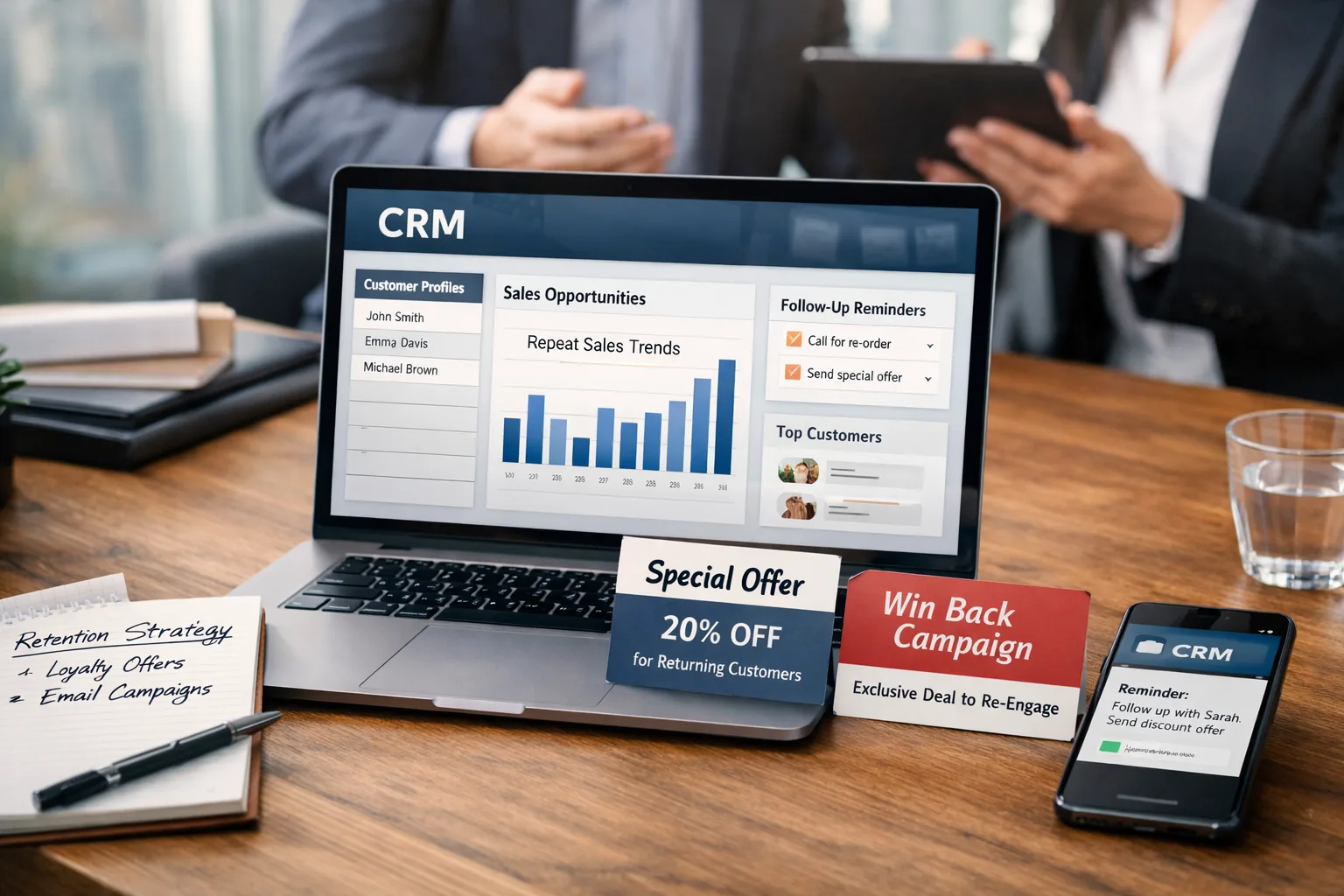
Let’s explore a few scenarios that illustrate how CRM can facilitate repeat sales:
What is the Cost of Manual Order Entry? A Calculation for a Store with 50 Orders a Day
- Scenario 1: Imagine you own a sporting goods store. A customer purchases a high-end bicycle, and a few weeks later, you send them an email offering discounted accessories, such as helmets and locks, that complement their bike purchase. This not only encourages them to buy more but also enhances their overall experience.
- Scenario 2: You run a café and notice that certain customers frequently order the same dessert. You could create a subscription service for monthly deliveries of that dessert at a special rate, ensuring they receive their favorite treat regularly while increasing your sales predictably.
What drives this process?
Several key factors contribute to the effectiveness of repeat sales through CRM:
- Customer loyalty: When customers are satisfied with their initial purchase, they are more likely to return for additional products or services. Building loyalty often leads to repeat business.
- Personalization: Utilizing CRM allows you to gain insights into your customers' needs and preferences. Tailored communications and offers make customers feel valued and understood.
- Automation: CRM systems can automate marketing campaigns, saving time and resources while ensuring timely engagement with customers. This can include sending follow-up emails or reminders for restocking products.
Common mistakes that hinder success
Despite the advantages of CRM for repeat sales, some businesses make common errors that can negatively impact their potential for growth:
- Ignoring data: Failing to utilize CRM analytics to understand customer behavior can lead to missed opportunities for engagement and sales.
- Lack of personalization: Sending generic offers to all customers without considering individual preferences can alienate potential repeat buyers.
- Failure to listen: Ignoring customer feedback post-purchase can result in a loss of trust and hinder future sales efforts.
What truly works in practice?
Here are some practical steps businesses can take to successfully implement repeat sales through CRM:
- Analyze customer data within your CRM system to identify trends and preferences that can inform your marketing strategies.
- Create personalized offers based on previous purchases, ensuring that your communications are relevant to each customer.
- Use automation to send timely reminders for repeat purchases or promotional offers, keeping your brand top-of-mind.
- Regularly engage with your customers via email newsletters or social media updates, sharing valuable content and exclusive deals.
- Collect feedback after purchases and adapt your offers according to customer needs, demonstrating that you value their input.
When is expert help needed?
While CRM can greatly simplify the repeat sales process, ensuring the security of your customer data is vital. If you're uncertain about system setup or protection, it’s wise to consult IT support specialists. They can assist with:
- Setting up secure access to data, ensuring that customer information is protected against unauthorized access.
- Protecting against cyber threats by implementing robust security measures and protocols.
- Optimizing system performance for increased efficiency, ensuring that your CRM operates smoothly and effectively.
Key takeaways
Repeat sales through CRM are a powerful tool for enhancing your business's profitability. They not only increase sales volume but also strengthen relationships with your customers. By utilizing the data from your CRM system, you can create personalized offers and maintain ongoing communication with your buyers, ultimately fostering loyalty and encouraging repeat business.
Frequently Asked Questions
Here are some common questions regarding leveraging CRM for repeat sales:
- How can I start using CRM for repeat sales? Begin by selecting a CRM system that fits your business needs, then input customer data to analyze purchase patterns.
- What types of data should I track? Focus on purchase history, customer preferences, feedback, and engagement metrics to inform your marketing strategies.
- Can small businesses benefit from CRM? Absolutely! CRM systems can scale to fit businesses of all sizes, providing valuable insights regardless of your company’s scale.
When to involve security or IT support
Security support becomes important when suspicious signals repeat, affect delivery, or touch accounts, domains, sites, or customer trust.
- spoofing, phishing, spam spikes, or login alerts keep recurring
- mail delivery, domain reputation, or site availability is affected
- logs show unknown devices, unexpected forwarding rules, or suspicious DNS changes
- the issue may involve customer data, credentials, payments, or production systems
If credentials, customer data, or production infrastructure may be exposed, escalate immediately and preserve logs before changing evidence.